
Geigenbau Biennale Kronberg
Where do violins, violas and cellos come from? From all over the world!
International violin makers, bow makers and string manufacturers will present their work at the Stadthalle Kronberg, opening its doors to professionals and music lovers alike.
In 2026, the International Violin Making Biennale Kronberg will take place alongside the Kronberg Festival “Courage!”, offering fascinating insights into the world of modern instrument making.
Discover the Biennale
Opening Hours
29 September – 2 October 2026
Daily from 10:00 am to 6:00 pm
Stadthalle Kronberg (Berliner Platz 1, 61476 Kronberg)& workshops at the Recepturhof (Friedrich-Ebert-Straße 6, 61476 Kronberg)

A GLIMPSE INSIDE THE WORKSHOPS
During the Kronberg Violin Making Biennale and the Kronberg Festival, master bow makers C. Jochen Schmidt and C. Daniel C. Schmidt from Dresden will relocate their workshops to Kronberg’s Stadthalle and Recepturhof.
Master violin maker Dominik Josef Wilk recently relocated his workshop permanently from London to Kronberg’s Recepturhof and will also be opening his doors to visitors. Take this opportunity to watch the master craftsmen at work!
Opening Hours
C. Jochen Schmidt
29 September – 2 October Stadthalle Kronberg
2 October – 4 October Recepturhof Kronberg
Daily from 10:00 am to 6:00 pm
Dominik J. Wilk
29 September – 4 October | Recepturhof Kronberg
Daily from 10:00 am to 6:00 pm
C. Daniel Schmidt
29 September – 2 October | Recepturhof Kronberg
Daily from 10:00 am to 6:00 pm

Sergio A. Chanquía began his studies in 2008 and after 3 years obtained his diploma in violin making from the BELE school of violin making in Bilbao-Basque Country. In 2013, he moved to Paris to begin his exclusive training as a bow maker at the S. RAFFIN workshop, where he worked for almost 8 years. He perfected his skills in restoring antique bows and making modern bows. In 2016, he quickly became workshop manager, pursuing his main activity in this workshop, bow making. In August 2020, he decided to take his evolution a step further and opened his own SACh Archetier workshop, continuing to make bows using the traditional French method, while adding his own personal character. In May 2024, he moved his workshop to Poigny-la-Forêt, France.

Children usually have to play on simple instruments with substandard bows. Just imagine how much better they could develop their musical and technical skills with highquality, handcrafted instruments and bows! Unfortunately, the ability to purchase or even rent such instruments often depends on the parents’ income rather than on the young musicians’ talent. The goal of con-Takt junior is to support young, talented musicians, regardless of their parents’ financial means. The violin and bow makers of the Klanggestalten group and their colleagues would like to provide talented children with outstanding, newly built small instruments and bows on loan, completely free of charge. The focus of their work is normally the construction of new instruments and bows for professional musicians around the world. Many of them now have children of their own, and they’ve come to realize how wonderful and important it is for talented children to be able to learn their instrument using high-quality, handcrafted equipment.

Jessica De Saedeleer makes violins, violas and cellos in the traditional Italian style. She strives to find the optimal setup for each instrument, tailoring it to the personality of each musician according to their musical needs. She combines traditional violin-making techniques with modern acoustic technology, with passion and excellence. De Saedeleer studied violin making at the International School of Violin Making of Cremona, Italy, and also holds a degree in Musicology from the Université Libre de Bruxelles, Belgium. Awarded a grant by the Fund „Vocatio“ in 2007, she regularly takes part in advanced courses on acoustics, violin design, style and varnishes, among other topics. She has participated in several exhibitions of contemporary violin making in Paris, Amsterdam, Brussels, Cremona, Sevilla and Riga. In 2018, she took part in the „Bilbao Project“, a European research initiative on violin acoustics. Her shop is currently located in Brussels.

Hans-Peter den Daas studied and gained a PhD in chemistry, after which he worked for a printer manufacturer in the Netherlands. An enthusiastic cellist, however, he had always played in orchestras and chamber music ensembles. Over time, the desire to make stringed instruments increasingly grew in him. He eventually learned the craft of violin making with Bernhard Zanders in Nettetal and recognised his passion in the specific challenges of the profession: the intellectual challenge of producing a valuable instrument and the emotional quality of working with wood. In 2017 he finally decided to change career and established his own violin making workshop. He makes violins, violas and cellos from European wood according to old traditions.
www.hdendaas.com

Michele Dobner was born in 1967 in Vicenza, Italy. After completing his artistic studies, he trained as a violin maker at the Civica Scuola di Liuteria in Milan. In 1997, following a formative experience in instrument restoration in Madrid, he moved to Cremona — the historic home of the “Golden Age” of violin making — where he has been based ever since. His work focuses primarily on the tonal refinement of both his own instruments and those brought to his workshop for restoration or setup. Michele Dobner’s workshop is located in the historic centre of Cremona, Italy, in the immediate vicinity of the Violin Museum.

Daniel Engelbach is a contemporary violin maker based in Rotterdam. He divides his time between his own workshop and the W.E. Hill & Sons workshop in London, where he works in collaboration with Robert Brewer Young. A graduate of the International School of Violin Making in Cremona, Daniel’s work is deeply rooted in the traditions of the classical Italian masters, their craftsmanship and aesthetic ideals. Daniel takes a deep interest in the varnish techniques of the old masters, which led to a close research collaboration with varnish expert Pierre Flavetta. As a cellist himself, Daniel strives to explore the acoustic possibilities of each instrument through close dialogue with musicians.

At the Franke violin-making workshop in Darmstadt, two generations are currently working side by side. Master violin maker and owner Jörg Andreas Franke gained experience in several workshops in Germany and abroad, including in Vienna, Munich and Paris, before setting up his own business. Over the years, he has specialised in bow rehairing and repairs as well as in optimising the sound of string instruments.
Master violin makers Elisabeth and Ulrich Stiefermann have been expertly repairing and restoring string instruments in our workshop for more than 39 years, always with the utmost care and precision.
Jörg Andreas Franke’s son Maximilian Franke and his wife Elisabeth have developed a particular passion for making new instruments. In 2024, they were awarded a silver medal for Violin Tone at the prestigious competition of the Violin Society of America (VSA) in Indianapolis.
Both continually expand their expertise through close professional exchange with colleagues and regularly take part in international violin-making courses, including in Oberlin, USA, and Brandenburg.
Daughter Lea successfully completed her journeyman’s examination in Mittenwald last year and now also works in the family workshop.

For master violin maker Constantin T. Fundateanu, music, and in particular the violin, has been an important, if not the most important part of his life from an early age. He attended the music high school in Bucharest and graduated with the highest honours. During his studies at the “Ciprian Porumbescu” Conservatory in Bucharest—now known as the National University of Music in Bucharest—he was a student in Prof. Geanta’s violin class.
He completed the violin-making studies under master violin maker Willy Pohoriles in Bucharest and passed his master’s examination with distinction. In 1985, he opened his violin-making workshop in Frankfurt, which he ran for 25 years. Today, his violin-making gallery is located in Darmstadt.

Jonas Gierten has been running his master workshop for violin-making in Wiesbaden since 2008. His long-standing and trusting relationships with a large and diverse clientele, along with countless instruments and vast experiences in problem-solving, equips him with a valuable foundation for consultation and practical work. The ability to offer a wide range of services – from high-quality new instrument making to restoration, maintenance, and optimisations in both sound and playability, as well as advising on finding, purchasing, and preserving instruments, assessing their value, and handling insurance claims – is ultimately made possible only by a dedicated, well-established team in his workshop.

Gawang Jung discovered the violin shortly after finishing high school in 2008. Over the next two years, he studied Italian and the fundamentals of stringed-instrument construction with the aim of enrolling in the world-renowned International School of Violin Making in Cremona. In 2012, he was admitted directly into the third-year class under the guidance of Maestro Massimo Ardoli, and graduated in 2015. He began his formative apprenticeship in the workshop of Maestro Francesco Toto in 2016; upon completing it, he remained with the workshop under formal contract. While working there in 2018, he built a cello independently over the course of a year and entered it into the 15th Antonio Stradivari International Triennial Violin Making Competition (Cremona, 2018) — regarded as the world’s most prestigious competition in the field — where he was awarded the Gold Medal (Overall Winner) in the Cello category. From 2019 to 2020, he collaborated with Maestro Francesco Toto as a partner. Since 2021, he has been operating his own atelier at Via Eugenio Beltrami 16, nestled in the historic heart of Cremona, where he crafts, restores, and sells string instruments to a global clientele.

For over 25 years, master violin makers Dorit Seilacher and Florian Geyer have been building violins, violas, and cellos for students, soloists, and amateur musicians. Both trained in Cremona and Mittenwald and subsequently worked in various workshops in the Netherlands, Austria, Germany, France, and New Zealand. Throughout this time, the craft of violin making has always been particularly close to their hearts. Their instruments have been awarded medals at international violin-making competitions in Cremona, Mittenwald, and Moscow. At competitions, exhibitions, and workshops, they regularly exchange ideas with colleagues about new developments in violin making. Their violins, violas, and cellos are played both as solo instruments and in chamber music ensembles throughout Europe.
Their latest cellos will be presented in Kronberg.
info(at)geigenbau-geyer.com , www.geigenbau-geyer.com

Born in Tegernsee, Stefan Johann Krattenmacher grew up in his parents’ furniture workshop and began playing the double bass at age 14. He completed his training at the Mittenwald School of Violin Making. He then worked for 10 years in Hong Kong, Australia, and England; this period allowed him to evolve both mentally, technically, and stylistically. The combination of his German training and diverse professional experience abroad sets him apart as a violin maker. In 1997, he earned his master’s degree and was awarded the gold medal for top academic performance. He has lived in Münchweier since 2007 and has been directing the chamber orchestra in Ettenheim since 2007. Krattenmacher is the winner of the 2018 Bass Maker’s Competition in Lucca, Italy.
www.krattenmacher.com

Born in Bad Tölz in 1947, Paul Lijsen attended the violinmaking school in Mittenwald and passed his master’s examination in the craft of violin making in 1973. Since 1980, his workshop has been located in Türkenfeld on Lake Ammersee. In 2007, he opened his Alpine tonewood warehouse, “Happy Soundwood,” where he primarily stores hazel spruce and maple. With his instruments, he has successfully participated in numerous national and international competitions and seminars, such as the International Cremona Triennial, the Mittenwald International Violin Making Competition, and the DVG Viola Days. Paul Lijsen is an active member of the Association of German Violin and Bow Makers (VDG), the German Viola Society (DVG), and the Bavaria South Musical Instrument Guild.
www.geigenbau-lijsen.de

In the Lüdtke family, a passion for violin making is now shared by three master craftsmen: father Uwe, daughter Anja, and son Jan are all master violin makers as well as active musicians themselves. Uwe and Anja play the violin, among other instruments, while Jan’s particular passion is the cello.
The family has been running its own violin-making workshop in Bolheim since 1995. For many years, the construction of new cellos and the tonal improvement of fine cellos have been among the workshop’s main areas of expertise.
The workshop also offers a wide selection of violins, violas, and cellos, with around 200 instruments currently available. Visitors are always welcome to try and compare instruments without obligation, including in direct comparison with an instrument of their own.
info(at)geigenbau-luedtke.de, www.geigenbau-luedtke.de

Urs W. Mächler completed his apprenticeship in violin making and bow making in Cremona. He worked in his father Willi Josef Mächler’s workshop until opening his own workshop in Verona in 1984. From 1995 to 2016, he ran his violin and bow-making studio in Speyer am Rhein. In January 2017, Urs W. Mächler opened his new studio to build cellos, violins, violas, and bows in Holzhausen am Hünstein. He is a founding member of Henley’s, a violinmaking shop in Cologne that was founded in 2007.
www.maechler.de

Master Violin Maker Jörg Meyer has been building resonant and easy-to-play string instruments in his own workshops since 1982. His services include restorations, repairs, rentals of violins and violas as well as personal consultation. Born in 1962, he spent many years training and studying viola and piano at music schools. In 1979 he decided for an apprenticeship in violin-making under Lothar Sandner in Markneukirchen. He opened his own violin making workshop in 1982 and passed the master’s examination in violin making in 1984. In 1991 as well as 2009 he participated in the Cremona Triennale and in 2001 Jörg Meyer won the “2001 German Musical Instrument Award for Violin”.

At the age of 30, Gonzalo discovered his interest in violin making. After completing his studies at the violin-making school in Bilbao, he had the wonderful opportunity to work alongside Philipp Augustin for three years—an experience that completely shaped his understanding of the craft. Since 2020, he has been working as a freelancer, focusing on building new instruments and seeking to create a body of work with its own distinct character. He completed various internships in the workshops of Frédéric Becker in Montpellier, Christof Erichson in Hanover, and Peter Körner in Mainz. After completing his studies, he moved to Mainz to work with Peter Körner where he had the opportunity to work with historical instruments and learn many details about the restoration of old instruments. His passion, however, remains in building new instruments in the historic heart of Cremona, where he crafts, restores, and sells string instruments to a global clientele.
www.gonzalopiarrette.com

Master Violin Maker Jörg Meyer has been building resonant and easy-to-play string instruments in his own workshops since 1982. His services include restorations, repairs, rentals of violins and violas as well as personal consultation. Born in 1962, he spent many years training and studying viola and piano at music schools. In 1979 he decided for an apprenticeship in violin-making under Lothar Sandner in Markneukirchen. He opened his own violin making workshop in 1982 and passed the master’s examination in violin making in 1984. In 1991 as well as 2009 he participated in the Cremona Triennale and in 2001 Jörg Meyer won the “2001 German Musical Instrument Award for Violin”.
www.geigenbauer-berlin.de

After completing his training at the vocational school for violin making in Mittenwald and spending seven years in renowned workshops in France, the U.S., and England, Wolfgang Schiele has been working as a violin maker in Munich for over 36 years. Today, his work focuses on building high-quality string instruments from scratch to date, he has crafted more than 110 instruments, each bearing his own distinctive tonal signature. His passion for music has accompanied him since his youth: As an active violinist and violist, Schiele continues to perform today as concertmaster of a Munich amateur orchestra, as well as in various string quartets and chamber music ensembles. Schiele’s instruments are characterised in particular by a light response, good tonal modulation, and impressive projection. Today, his instruments are played by freelance musicians as well as by members of renowned orchestras—including the Munich Philharmonic, the Bavarian State Opera, the NDR Orchestra Hannover, and the Qatar Philharmonic Orchestra.
www.schiele-geigenbau.de

C. Jochen Schmidt, born in 1969 in Klingenthal in the Vogtland region, completed an apprenticeship as a bow maker under his father, C. Hans-Karl Schmidt, in his workshop in Dresden. This was followed by a one-year work expereince at Willem Bouman’s violin-making workshop in The Hague and several years working in his father’s business. In 1993, C. Jochen Schmidt passed his master’s examination in Nuremberg. In 1997, he opened his first workshop in Dresden. He has won several medals and honorary awards at national and international violinmaking competitions.
www.jochenschmidt.net

Thomas Schunk, born in Neckarsulm in 1958, grew up in a musical family. All six of his siblings learned to play a string instrument. When he began an apprenticeship as a cabinetmaker in 1974, he also took violin lessons from Prof. Rosa Berger in Neckarsulm. During this time, his enthusiasm for violin making grew. In 1981, he switched not only instruments but also careers. While learning to play the viola under Michael Hanko in Karlsruhe, he began an apprenticeship in violin making at Gerriet Groth’s workshop in Wiesbaden. In 1988, he honed his skills at Peter Körner’s workshop in Mainz. In 1997, he passed the master’s examination in the craft of violin making and subsequently worked for several months in Seoul. At the end of 1997, he opened his own violin-making workshop. In addition to his regular work on maintenance and repairs, he has since devoted himself intensively to building new instruments. His primary focus is on researching historical construction methods and refining them to achieve the ideal sound.
geigenbau.schunk(at)web.de

For over 40 years, master violin makers Ekkard and Ferdinand Seidl have combined masterful craftsmanship with passionate dedication to building stringed instruments. Their expertise lies in violins, violas, and cellos, which are crafted with the utmost precision—each instrument is one-of-a-kind, with a unique sound and perfectly tailored to the individual playing style of its owner. They offer a wide selection of different models and create custom-made instruments tailored entirely to the customers’ wishes. This ensures that musicians will always find the right instrument that perfectly embodies their vision of sound. A special highlight of their master workshop is the patented cello spike, crafted from carefully selected materials. This innovative component significantly enhances the sound and can be tried out and purchased during a visit to Kronberg.
www.seidlgeigen.com

Born in 1995, Robin Szombath graduated with distinction at the age of 19 from the School of Art in Hallstatt after completing a four-year training program. His final project—an alaude—won the „Best Instrument“ award and solidified his passion for crafting stringed and plucked instruments. During his years as a journeyman, he worked with renowned workshops such as those of Tomáš Kaiser in Bratislava and Jürgen Manthey in Leipzig, where he crafted violins, violas, and cellos. After obtaining his master craftsman’s diploma with distinction in Hamburg and Linz in 2020, Szombath was awarded a scholarship to further refine his skills at various workshops in Austria, France, Ukraine, and Portugal. Initially working independently in Burgenland, he subsequently opened his new workshop in Porto as a master violin maker. In 2022, Robin Szombath was honoured with the bronze medal at the XIII Concorso Internazionale di Liuteria di Pisogne.

A place where new and old master instruments meet.
With passion and craftsmanship, Thorsten Theis transforms the finest old woods into a unique cello work of art. Every cello that leaves his workshop is the result of precision, dedication and love of music. His newly built cellos combine traditional craftsmanship with modern innovations to meet the highest tonal demands.
In addition, his collection houses a diverse selection of old master instruments that are between 100 and 300 years old. Each instrument tells its own story and radiates a timeless elegance.
In 2019 Sebastian Fritsch, a young cellist, won the German Music Prize on a new, handmade cello by Thorsten Theis. In 2023, Philipp Schupelius, another highly talented cellist, was honoured with the coveted prize, playing a Theis cello.
It’s the attention to detail, the passion for the craft and over a quarter of a century of experience that goes into every single cello. It is the deep connection between artist and instrument that leads to extraordinary performance. It is a piece of craftsmanship that grows with the artist, inspires him and enables him to express his music in all its facets.
Master Cello Maker Thorsten Theis
Weststr.22 a
51643 Gummersbach
Tel.: 02261/8182984
mail@itsatheis.com
www.itsatheis.com

Klaus and Andreas Uebel are now in the fourth and fifth generation of working at the historic Uebel workshop, where high-quality bows for string instruments have been crafted since 1892. They craft bows of the highest quality for discerning musicians, using only carefully selected materials and precise craftsmanship. To meet the highest standards and demands, the two continuously refine and develop their models through close collaboration with various prominent soloists. In 2022, Andreas Uebel was awarded four prizes at the 9th International Violin and Bow Making Competition in Mittenwald. He received gold, silver, bronze, and a special prize from the VDG for the most distinctive craftsmanship.
www.geigenbogen-uebel.de

Born in Klingenthal, in the Musikwinkel region of the Vogtland, C. Daniel Schmidt began an apprenticeship as a bow maker with his father, C. Hans-Karl Schmidt, in Dresden. After winning his first gold medals and obtaining his master craftsman’s certificate, he spent several years travelling and working in Amnon Weinstein’s violin-making workshop in Tel Aviv. He has had his own workshop in Dresden since 1996. C. Daniel Schmidt is a member of the Dresden Musical Instrument Makers’ Guild, President of the German Violin Makers’ Association and a representative of the ‘Entente International des Luthiers et Archetiers’. He was appointed to the jury of the international Etienne Vatelot Violin and Bow Competition. In addition to crafting new bows for violins, violas and cellos, restoration and repair work form an integral part of his practice.

Before he began his training at the Mittenwald Violin Making School, Dominik J. Wlk had already built his first violin himself in his grandparents’ carpentry workshop. Following apprenticeships in workshops across Europe and several years’ work at Erben Geigenbau in Munich, he was awarded his master craftsman’s certificate and the German Government’s Gold Medal. Since then, he has been Stefan-Peter Greiner’s sole assistant in London. He is also head of the workshop at W.E. Hill & Sons. His work is inspired by the shapes and colours found in nature, to which he feels a strong connection, and by the finest examples of Italian violin making, to which he has had access throughout his career.
Junior Violin Makers
For the first time in the still relatively young history of the Kronberg Violin Making Biennale, Kronberg Academy has launched an open call for young violin makers under the age of 30, offering them the opportunity to showcase their craftsmanship at the exhibition free of charge.
Three young violin makers were selected from international applications, representing the next generation of their craft. Each of them completed their training at a different violin making school.
Take this opportunity to meet these talented young craftspeople in person at the exhibition!
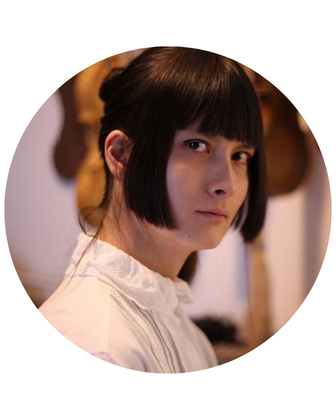
Elise Veldt completed her training at the Wood and Furniture College in Amsterdam, specialising in restoration, before undertaking an apprenticeship with a master of the Dutch Violin Makers’ Guild. She developed a deep passion for antiques and history from an early age. Since 2023, she has devoted herself entirely to making Baroque violins.
Elise crafts each of her instruments entirely by hand, following historical models: the neck is attached with nails, the instruments are fitted with gut strings and made from locally sourced woods, as was customary in the past – without the use of exotic or imported materials.
Inspired by the work of the old masters and the rich heritage of historical instruments, she creates violins that are far more than mere sound-producing objects: they are an expression of her soul and her dedication to her craft.
Elise Veldt | Purmerend, Netherlands Website: www.eveldtvioolbouw.nl Instagram: @Elise_Veldt
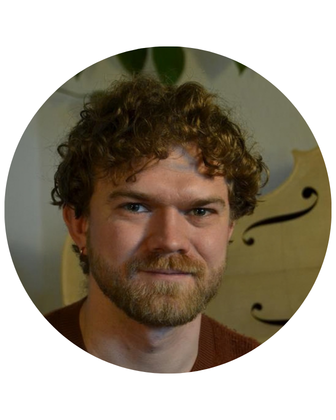
Adrian Pfeiffer graduated with distinction from the Swiss School of Violin Making in Brienz in 2023. He subsequently worked with violin makers and restorers Kogge & Gateau and Ragnar Hayn in Berlin until 2026. He specialises in crafting violins, violas and cellos based on historical models.
Adrian particularly enjoys creating meticulous copies of historic instruments, such as Guadagnini’s “Ex-Hart, Wanamaker”. He also makes fully varnished, unplayed instruments, always remaining faithful to historical models and traditional manufacturing techniques. When creating instruments that are not intended as exact copies, he enjoys incorporating his own personal taste and style.
He is currently working on a copy of Guarneri del Gesù’s “Leduc”. Alongside his work as a part-time lecturer at the Swiss School of Violin Making, Adrian is establishing his own workshop.
Adrian Pfeiffer | Brienz, Switzerland Instagram: @adrian.pfeiffer
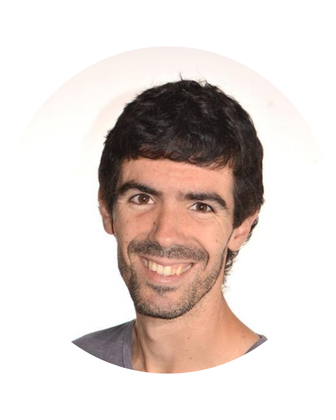
Beñat Guraya has been making instruments alongside his father, violin maker Javier Guraya, in his workshop in Getxo, Spain, since early childhood. He completed his training at the BELE School of Violin Making in Bilbao and has worked with Anxo Cabreira, Gianmaria Stelzer and Christian Bayon.
With great care and attention to detail, he is particularly dedicated to studying and recreating the body structures of string instruments from the classical period. His extensive exploration of these historical construction techniques forms the foundation for the sound of the instruments he creates today.
Beñat currently works in his workshop at Luis López Osés 18, bajo, where he crafts new instruments with a powerful sound, exceptional resonance and a distinctive tonal character of their own.
Beñat Guraya | Getxo (Bizkaia), Spain Instagram: @benat2olinak

PIRASTRO GmbH was founded in 1798 by Giorgio Pirazzi, a string maker from Italy, as Giorgio Pirazzi & Figli in Offenbach am Main. At the end of the 19th century, the company’s then-leader and grandson of the founder, Gustav Pirazzi, decided to bring his friend Theodor Strobel into the company as a partner. The brand name PIRASTRO was derived from the first four letters of their last names. Today, Annette Müller-Zierach and her brother Henning Müller-Zierach lead a company that, as a family business now in its sixth generation, is synonymous with quality in gut, steel-, and plastic-core strings, as well as rosin.
www.pirastro.com

Larsen Strings A/S is a Danish specialist producer and global exporter of strings for cello, viola and violin. Founded in 1990 by musician and technical enthusiast Laurits Th. Larsen, the ethos of the company is driven by a passion for music. The “Art of Science” means combining high end materials and production technology with direct creative development with musicians to deliver a truly innovative portfolio of bowed instrument strings. Innovative ideas lead to the continual development of the product range.
www.larsenstrings.com

Which string can tame the wolf tone and which one is the most corrosion resistant? Find the strings that suit you best – whether they offer special sound qualities or are designed to solve a problem.
With more than 100 years of experience in string development, Thomastik-Infeld GmbH offers handmade strings for all string instruments. Since 1919, Thomastik-Infeld has been developing and manufacturing modern, hightech strings for stringed instruments such as the violin, viola, cello, and double bass, as well as for plucked instruments and world music instruments such as the guitar, mandolin, erhu, and oud.
info(at)thomastik-infeld.com, www.thomastik-infeld.com

Mannheimer Versicherung AG developed a policy specifically for musical instruments as early as 1900. Today, under the SINFONIMA® brand, it is Germany’s leading instrument insurer and offers comprehensive insurance coverage for classical musical instruments and the instrument-making trade. SINFONIMA processes more than 5,000 claims annually. The experience gained from these claims helps the company continuously refine its insurance benefits and policy terms—to the benefit of its customers.


